The Third Sunday after Pentecost (Proper 6A)
Matthew 9:35-10:8
All Saints Episcopal Church, Northfield, Minn.
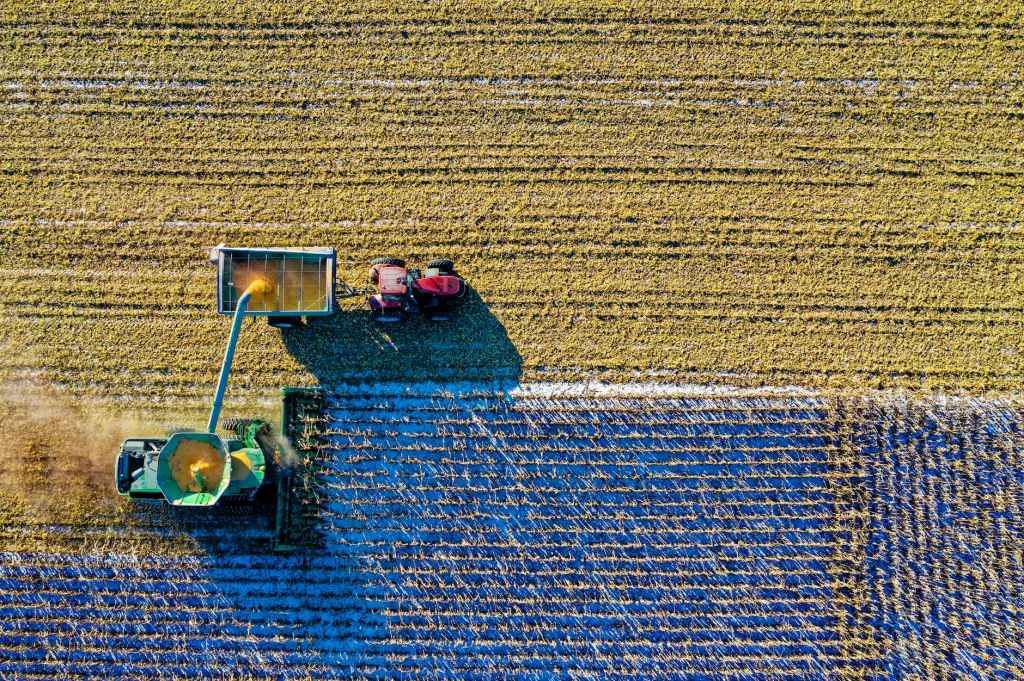
As the gospel reading opens today, we are given a montage of Jesus journeying from town to town doing the things that we imagine Jesus does: preaching, teaching, healing, a few good men trailing in his wake. He tells interesting stories and admonishes his opponents and miraculously heals people with a gentle touch and a serene gaze. He gravely tells us that “the harvest is plentiful but the laborers are few,” and the clouds part and the music swells. It’s all very pious. You can almost hear the hymn:
Come, labor on.
Who dares stand idle on the harvest plain
while all around us waves the golden grain?
And to each servant does the Master say,
“Go work today.”
I used to be a member of a parish where the rector loved this hymn, especially at the end of the service with a big rousing organ accompaniment, and it’s very effective, to be sure. I had a fellow parishioner who was generally a very agreeable and kind person, but every time we sang this he would talk about how much he hated that hymn. “It’s so dour and heavy!” But in my youthful fervor I didn’t understand how you could dislike such inspiring words nearly straight from the pages of scripture. Jesus the all-knowing, all-seeing master and we the humble servants, with a world in need ripe for the saving right outside our doors. There’s a performance review on the line! Who dares stand idle?
Let’s rewind the tape a little, back to the montage. Jesus the itinerant preacher walks from town to town, teaching in the synagogues and proclaiming the good news of the kingdom, and as they encounter this man they feel the geography of their lives shift as old wounds begin the work of mending. And in town after town, village after village: crowds. Small ones, large ones, crowds of people who have heard the rumor of this prophet who leads a community of the blessed: the poor, the meek, the hungry, the mourning, the merciful, the peacemongers. As we go from town to town and village to village with Jesus, we see a picture emerging of a nation adrift, a community beset by division and desolation and a poverty of body and spirit so severe that the entire project of the people of God is in danger of collapse. Who is in charge? Who allowed this to happen? Where is the shepherd? And here Matthew gives us a word we render in English as compassion, but it carries the sense of the stomach clenching with emotion, even grief. Jesus is moved, not with pity or condescension, but with true compassion: an urgent understanding that the situation is dire and a desire to do something about it. The scope of the work is plain and it is overwhelming.
I currently serve the Church as campus minister at the University of Texas in downtown Austin. It’s a sprawling campus that is home to 52,000 students, and our little student center has been perched right on the northern edge of campus for almost 125 years. Episcopalians set the bar for campus ministry pretty low these days, so on my first Sunday there we had 35 students show up for our Sunday evening Eucharist and I was pretty excited. Thirty-five! Who knew such wonders were possible? But as I settled in, I began to worry. To be in campus ministry in 2023 is to try to bring some kind of good news to new adults dealing with the pressure to perform academically, dealing with a keen sense that the world they are inheriting is on fire both metaphorically and literally, dealing with the simple struggle to get the task list done and still be able to afford something to eat. No wonder the mental health crisis is a clear and present danger among college students: “harassed and helpless” is putting it lightly. 52,000 students is a lot, and I’m just one me. The harvest is plentiful, the work is enormous, and the laborers are indeed few.
Jesus understands this; he says as much. He sees the depth of the people’s pain and does not turn away or try to do it all on his own, which are the things I usually do, often to my own embarrassment. But all the same, Jesus does something very human: he asks for help. What he actually does is ask us, his followers, to ask for help. “Ask the Lord of the harvest to send out laborers into his harvest.” In this moment, Jesus is not the divine taskmaster. He understands that the world is too big and the needs too deep for any one person to accomplish. We’re going to need more help.
Rarely do I pray for helpers. I wish for them, certainly, or complain that there are not enough helpers, but that is not the same thing. If we are going to pray that God’s will be done on earth, we will have to expand our horizons and pray in faith for God to send out laborers into every field, not just our own.
So send out laborers, O God!
Send them into the highways and byways, to the towns and villages and cities, to people near and far.
Send them to the college campuses, send them to the office parks.
Send them to the soup kitchens and the refugee centers.
Send them to the halls of power, and to the powerless who those in power threaten.
Send them to the wealthy who need to be freed from their money and send them to the poor who have none.
Send them to the addicted and the despondent, and send them to those who care for them.
Send them to the fields of battle at home and abroad, and teach those who wage war to melt their rifles into gardening tools.
Send them to the schools, O Lord, and to our children, and send them to those whose souls are being curdled toward violence.
Send them to the Church, if you please, to the parishes and the seminaries and the monasteries.
Send them to bring a word of peace whose faith is damaged, and a word of encouragement to those who faith is strong.
Send them to immigrants and the labor organizers and to all who have no one to advocate for them.
Send them to actual fields, to the forests and to the seashores, to the parks and to our gardens and to the endangered habitats.
Send them to the bees, who struggle so.
Send them to the science labs and the hospitals and the nursing homes, send them to all the sick and lonely.
Send them to us especially, for we too need a word of good news.
Send them to those we love, send them to those we find unbearable, send them anywhere and everywhere, it really doesn’t matter: just send out your laborers, O Lord!
Send them out, for the harvest is plentiful and the laborers are precious few and the field stretches as far as any of us can see.
Jesus asks for help, and in nearly the same breath he turns and his loving, compassionate gaze lands on us, we who are already here. He fills his disciples with the same authority he himself possesses, the same love that enflames his most sacred heart, and then he sends them, not to the ends of the earth, but to those they already know. The kingdom of God, the kind of change that Jesus has in mind, is not something that happens in a vacuum. It’s not a universal principle that can be reasoned out. It happens in relationships, in a shared connection that makes the unbelievable claims of the kingdom of God believable. It happens because those twelve went out and bore witness to what Jesus had done and was doing, and they told someone else, and someone else, and on and on until you walked through that door this morning. The kingdom of God happens when a community of Jesus-followers gets together and keeps making room at the table, keeps greeting the person in front of them, keeps going out into the neighborhood to find more people to invite to the party. Old wounds are healed, new life bursts into bloom, the hungry are fed.
The engineering student who struggles with socializing finds a place where people are patient and gracious. That’s good news.
The queer student with a physical disability finds a place where she isn’t reduced to an inconvenience. That’s good news.
The straight-A student finds a place where his achievements aren’t the thing that defines him. That’s good news.
The student raised with an abusive idea of who God is finds a place where she can say “because of this place I’ll still have a relationship with the Church.” That’s good news.
The good news of the kingdom of God is that there is something better than your status quo. God loves us too much to leave us where God finds us. And when Jesus sends a few laborers out, it’s not to save the world, because that was never our job. We are the helpers, and there are more on the way if only we will ask. Jesus, lover of our souls, is deeply moved to compassion for the harassed and helpless, and in every breath gives us the strength to go and do likewise, because this is the love that has been poured into our hearts. Thanks be to God.
 Noah Stansbury
Leave a comment