Ash Wednesday
Joel 2:1-2,12-17
All Saints Episcopal Church, Austin
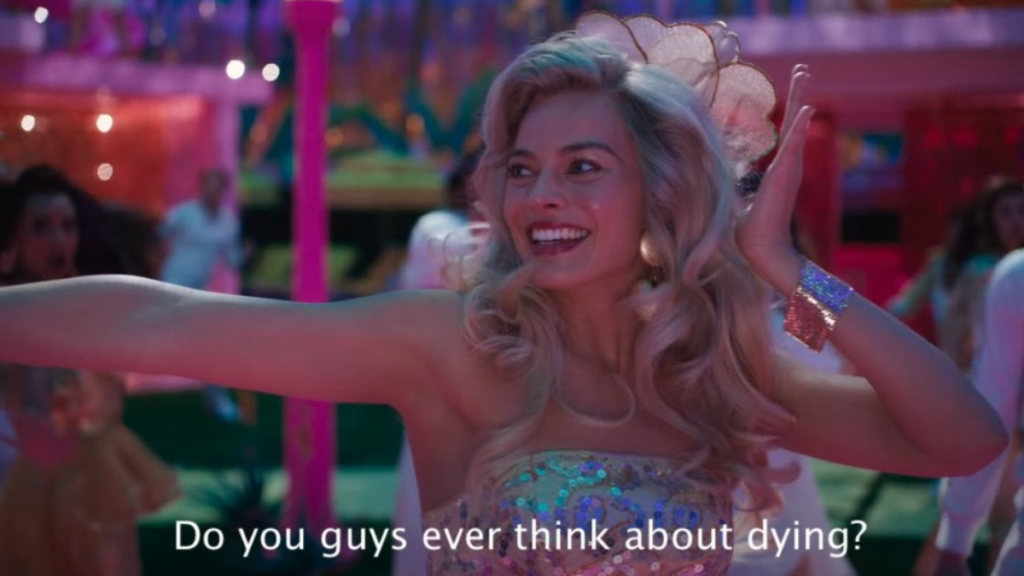
Last summer America went to the movies in a big way for Greta Gerwig’s treatment of a pop culture icon: Barbie. I was there opening weekend in my best neon pink-and-yellow button-down shirt and cotton-candy-pink sneakers to join Barbie and her friends on their perfectly perfect day: the best day ever, in fact, just like the day before and tomorrow and the day after and the day after, forever and ever, amen. Barbie lives in a world without trouble, because she is, of course, a doll, and doesn’t know any better. Early in the film she is joined by her friends for a party, with wonderful dancing and better music, where she is the center of attention. Over the din of the music, the blonde bombshell suddenly shouts to her friends: “Do you guys ever think about dying?” and the music scratches to a halt. Welcome to Ash Wednesday. That afternoon I was fresh off seeing the biopic about Robert Oppenheimer, the inventor of the nuclear bomb, so I was in fact mindful of death, destroyer of worlds–but set that aside. “Do you guys ever think about dying?” is the question Ash Wednesday asks us, blundering in every year on top of whatever bright lights and driving beats surround us, and blundering this year onto the frilly, pink trappings of Valentine’s Day. The Church’s somber, skull-laden reminder that you are mortal and will one day die does not sound like good news in the ear of most people, who would rather be doing something more fun, or at least less severe. But if you are here on this day of all days, then I am guessing that you are not like most people.
Back in Barbieland, Barbie realizes that her irrepressible thoughts of death are connected to goings-on in the Real World, where she must travel to learn that things are not as perfectly perfect as she thought. Far from what could have been an easy paycheck cashing in on nostalgia, Gerwig and her cast offer us a thoughtful, if sometimes silly, set of reflections on womanhood, masculinity, capitalism, the use of power, the stories we tell and the ones we don’t, and what it means to be human. Gerwig herself notes the impact of her Christian upbringing on this story, alluding to Genesis and the story of the fall: “[Barbie lives] in a world where there’s no aging or death or pain or shame or self-consciousness, and then she suddenly becomes self-conscious — that’s a really old story. And we know that story.” In other words, Barbie’s growing awareness of her self and her relationships, and of the reality that she could one day come to an end means she has to become human.
In a few moments the clergy will remind you that as a human you are made of dust and that is where you will return, and then we will rehearse our sins. There are plenty of Christians who would like you to think that we are lowly worms groveling for God’s approval. But Ash Wednesday’s startling reminder of our mortality is not a symptom of theological low self-esteem or a nihilistic fixation on death for its own sake. Rather it is the blast of the trumpet that the prophet Joel sounds. We are startled into self-awareness; we have something to live for and we have not been using the time well. The Church invites us to remember that we are made of dust whether we ever attain self-awareness or not, but that things are likely to go better for us if we do.
We come to church to tell the truth: about ourselves, about the world, and about God. The truth that Ash Wednesday tries to convey has something to do with all of those. We tell the truth about ourselves: that we are actually not that good at knowing what is going on in our own soul, that we are limited in our ability to free ourselves from the things that burden us, and that our lives will one day end. We tell the truth about the world: that because of these things just mentioned, we are, frankly, not doing that well and we are caught in a downward spiral, though that insight seems less controversial than it might have once been. But above all, we gather today to tell the truth about God, who hates nothing they have made and forgives the sins of those who change their hearts and lives. When I finally pull out of the dreadful spiral about the state of the world and my own crooked heart, I remember that. I find myself surrounded by voices calling to me and reminding me of the truth that this is not all there is. We follow a God who is listening and who does care, who—let’s admit it—would be within their rights to feel angry about the harm being done to their good, good, good creations; anger not out of cruelty or spite, but out of love, steadfastly, to the thousandth generation, brimming, overflowing with compassion and mercy.
And if you are here in this church today, then you are already that path that leads to the loving, merciful, compassionate heart of God, even if you are just starting out. When we realize who we are and who we have been, we can take courage that the sometimes painful work of truth-telling and change is essential to growing in and toward love. This day is a reminder that life is shorter than we think, and the time is always right to ask for God’s help in making a change for the better, even if you aren’t sure what that change might be, even if you know exactly what I’m talking about but don’t feel brave enough.
For her part, Barbie must go on a journey of realizing that self-awareness is a genie that can’t be put back in the bottle. In the end she finally chooses to stay in the Real World and lean into becoming human: self-awareness, death, and all. She leaves behind life as she thought she knew it so she can move closer toward what she was made for, and in the process realizes that maybe those irrepressible thoughts of death weren’t so alarming after all. As we begin to mark the pilgrim way of Lent, lean in. Practice self-awareness. Tell the truth. Become more human. And maybe, at least for a minute, think about dying.

 Noah Stansbury
Leave a comment