• Galatians 3:25-28
    John 3:16-18
    Seminary of the Southwest, Austin, Texas

    Every August my friend Kara shares this bit of advice for seminarians, which I still return to frequently in my life as a priest: “If you’re going to share the Gospel with others, you need to hear it for yourself, as good news for you, first.” She goes on to say, “No one will be a priest” (and here you might substitute your own vocation) “exactly like you will. Being a priest is full of joy, but it is not a means towards your own self-actualization.” There’s a tension here: search for, find, and trust in God’s good news for you, in the fullness and particularity of who you are… and keep in mind that this is not the most interesting thing about the Gospel.

    As I was preparing to preach this evening I found myself facing a similar tension in our liturgy. We gather tonight to celebrate God’s love for “the whole human family” across sexualities, races, ability, genders, migration status, you name it. But even as we do so our readings from Galatians and the Gospel of St John are pointing us to something more interesting about what God is up to. The verses we heard this evening are snippets—bordering on the verge of prooftexts—from longer examinations of who is in God’s family. Paul writes to the fledgling community of believers in Galatia, who seem to be confused about the relationship between what God had done through Abraham and what God had done through Jesus. To be part of God’s people does not mean one needs to look like the other. In John, Jesus and Nicodemus are having a conversation about birthing processes, similarly focused on whether physical lineage is what makes the difference, or whether it is the condition of the heart that unites one to God’s family. In both of these discourses, St John and St Paul come to the conclusion that our material condition—which in both passages very specifically includes our bodily state—is not what bring us into right relationship with God, but rather trusting in the work of Jesus is the key that opens the door behind which redemption lies.

    You may recall that St Paul is responding to a specific physical marker of conformity in the practice of circumcision, and he emphatically rejects the idea that everyone (or at least the men) needs to be the same: “You foolish Galatians! Who has bewitched you?” But instead of pausing to exalt the value of unity across diversity he subverts the argument of his opponents to remind the Church that our identity lies beyond those we bring along with us. He does not revel in how the Body of Christ is made of Jew and Gentile, male and female, slave and free, but rather that the distinctions have been obliterated in the eyes of God for those who have put on Christ. These differences do not actually matter for the purposes of figuring out who we are as the Church— unilaterally redeemed by the God who created us and welcomed us into the primordial promises made to Abraham. Elsewhere of course Paul is happy to go to great lengths to celebrate the many gifts given to the one Body, but even then he is focused on the idea that the lordship of Jesus Christ in our lives is the only thing that makes this discipleship project possible, because we the whole human family have proven time and again our inability to get it right on our own. The collect that lends its name to tonight’s service takes a pretty dim view of humanity. It portrays us as arrogant, hateful, separated, struggling, and confused… and yet for all that: redeemed and destined for harmony through no accomplishment of our own.

    The most interesting thing about the Gospel is not that God has created and called together a diverse body of people so we can hold hands and sing Kumbaya while still clinging to our differences. Rather, the most interesting thing about the Gospel is that through the death and resurrection of Jesus Christ God has broken the chains of sin, separation, and death as you experience them in all of your uniqueness, so that you can know and trust this good news for yourself and invite everyone else around you, in all of their uniqueness, into that life unfettered by death.

    God has called a chosen people, the children of Abraham and members of the Body of Christ our great high priest, to intercede for this fractured world and to labor on Christ’s behalf until he should come again in glory. Even as we acknowledge the goodness of what God has made us to be, we must remember that our differences will not save us, but they can be tools for redemption if we let them. Our differences are an interesting part of the Gospel to the extent that they are gifts from God that equip us to do the work that no one else can do. “No one will be a priest exactly like you will.” Our differences are interesting to the extent they allow us to reach others who see we are like them and trust us long enough to hear the message that separation and death are not the final word for God’s children. Because if God can free you, then maybe that means God can free me too.

    Of course the Church fails at living this out, left, right, and center. Why do we need gatherings like this if not to remind ourselves that God does not use only those who look like the powerful? The Church has much to repent of by ignoring St Paul’s exhortation that we cannot be saved by conforming to a single way of being human. But we cannot tell God something she doesn’t already know. We cannot make the love of Christ any bigger than it ever was. The marginalized do not need to be welcomed into the Church as if they have been offered some right or claim they have not had since the beginning. Rather those of us who have been happy to take up space and insist on conformity need to get out of the way; to tear down the dams and let the river of life flow where it will. Elsewhere Paul reminds the Corinthians: “Look at your situation when you were called, brothers and sisters! By ordinary human standards not many were wise, not many were powerful, not many were from the upper class. But God chose what the world considers foolish to shame the wise. God chose what the world considers weak to shame the strong. And God chose what the world considers low-class and low-life—what is considered to be nothing—to reduce what is considered to be something to nothing. So no human being can brag in God’s presence. It is because of God that you are in Christ Jesus. He became wisdom from God for us. This means that he made us righteous and holy, and he delivered us” (1 Corinthians 1, CEB).

    Honoring the diversity of humanity is not “the high calling angels cannot share.” It’s not even the most interesting thing about the Gospel. But it is the cradle in which God invites us to know the good news for ourselves first, so we can share it with others and bring the whole human family into that song of harmony that flows from the throne of grace, world without end.
  • true story
    You can watch this sermon above at 35:45.

    The Fourteenth Sunday after Pentecost (Proper 16B)
    John 6:56–69
    All Saints’ E
    piscopal Church, Austin, Tex.

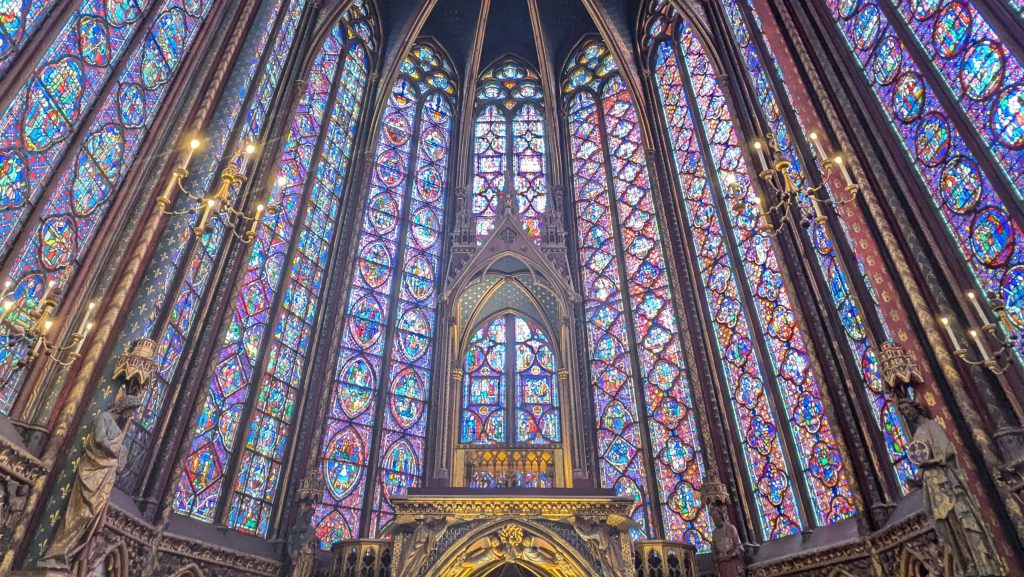
    A few weeks ago I had the opportunity to travel to Paris with a friend. I had visited Paris once many years ago but one landmark that had somehow escaped my notice was Sainte-Chappelle, one of the great chapels of the kings of France (back when France went in for things like kings). Sainte-Chapelle has stood for nearly 800 years on the same island as Notre-Dame at the heart of the city, and is known for its windows of stained glass, much of it original to the 13th century. I had seen pictures, of course, but as we climbed the narrow stone staircase and emerged into the room, I recognized they had not done it justice. Thousands of panes of glass weaving together hundreds of scenes with exacting intention rising nearly 150 feet in the air – pane after pane after pane, seemingly unbroken by masonry, a riot of light and color, impossible to take in all at once. It should not have come as a surprise to me that of course the windows were meant to be read. We entered the room under the Genesis window, dozens of scenes beginning with the creation of the world that proceeded in order from bottom to the far-off top, then the next window picking up with stories of the Exodus and wandering in the wilderness, on through the stories of Israel’s kings and prophets, culminating over the altar with the Gospels – stories from the life of Jesus and the events of Holy Week, and an entire bay dedicated to the story of the chapel itself, built to house, it is said, the crown of thorns itself. Louis IX, the pious king who is remembered as a saint today, August 25, was moved to give physical manifestation to the stories of his faith, because he thought they were worth telling and because he understood himself to be in the midst of something much larger than him and he did not want to forget. And here they stood, right in front of me, to continue that work. A friend called it “the most beautiful room in the world” and I cannot say he was wrong. 

    As we did our best to take this all in, we were of course joined by dozens of our new best friends, the other tourists who were with us. People from all over the world wandered around, speaking to each other in hushed tones and pointing to what they saw far over head. From time to time the excited whispers would rise to a crescendo and punctuate with a voice that rose over them: “Silence s’il vous plait ! Merci.” “Quiet, please! Thank you.” Things would quiet down for a bit, but this happened a few times. After the second or third “silence, sil vous plait”, as I was trying to make out an obscure scene from the book of Kings (or was it the Gospel of Mark?), something broke through into my awareness. The windows were still speaking, and in some mystical way, here we were to give them voice and carry them on. Like Louis, whether we meant to or not, we had found ourselves in the middle of something still in the process of being told, and there on that day had taken our place in it, however small.

    I was overcome with the sense, not for the first time, that we are fundamentally story-telling creatures. We can’t help it. If you want to get to know someone, they’ll start telling you part of their story. My name is Noah, I was raised by people whose stories in turn came from a small town in Virginia, which means they believed in the duty to set yourself aside for the good of God and country, and I have been trying to figure out how to do that ever since. We follow a God who has revealed themself in and through and as Story, as Word-made-flesh, who feeds and sustains us with the essence of who he is, as ordinary and miraculous as a bit of bread. We gather here every Sunday to read from a few of those stories that have been passed onto us and to find where they resonate with our own. Christianity is not a set of doctrines or beliefs or a checklist of actions, it is a story that shapes the way we see ourselves and the world. If you want to know God you have to know God’s story, because that is one of the primary ways God tries to talk to us.

    We are all shaped by stories, both the ones that have been told to us about the world and the ones that we in turn tell ourselves about what is real and what is possible. The American theologian Stanley Hauerwas has written at some length about the importance of the stories that shape who we are as individuals and as a society, and particularly whether those stories are true. Not true in the sense of stories that are made up of only the very best facts or the stories we have been told are the right ones to believe, but stories that allow us to see the world as it is, face into it with courage, and go on. “When we do not understand, we are afraid,” he says, “and we tell ourselves stories that protect ourselves from the unknown and foreign.” A true story is one that confronts us with reality and encourages us to live into that truth, to journey through the unknown and foreign, whether it is what is right in front of us or something deeper that may have been obscured. A true story, in other words, is a story that comes straight from the Spirit of life itself, who fills all things and feeds us, strengthens us, nourishes us toward an understanding of ourselves and the world that finds joy and hope in the midst of suffering. At their best, universities are places where true stories are sought out, the primary goal for student and teacher and administrator alike. As we begin a new year, we do well to pay attention to the stories we are telling ourselves about what universities are for and what we are doing here, especially where money, power, and keeping up appearances stand ready at every moment to lead us astray from true stories people need to hear.

    We are, all of us, part of a story, and we need to be sure the stories we tell are true. Saint Louis IX understood this and built a monument to it, to remind himself. Peter understood it when he asked, baffled, “Lord, to whom shall we go? You have the words of eternal life.” What are the stories that we let direct us? What stories have been told to us? What stories do we pass along to others? Do they bring life? So many lives end in tragedy because they are crippled by stories that are false, not least because people conclude there is no hope for them, and often no hope for anyone else. But here we gather to place ourselves in a Story that began long before us and will continue long after us, a story that is about many things: the redemption of our many failings not least among them, but also beauty, hope, justice, and love. It is a story that invites us to set aside our ambition and simply take our part within it. This teaching is difficult. Telling ourselves a story of forgiveness, justice, and love is simple, but letting ourselves be changed by it is harder. But if all that sounds too lofty then we gather here at the very least around a story about being fed, nourished, and nurtured by the Word-made-flesh, whose nourishment does not end and whose story is nothing less than true, and hope-filled, and life-giving. Take and eat, this is the bread of heaven that keeps you in everlasting life.

  • reading other people’s mail
    You can watch this sermon above at 33:24.

    The Seventh Sunday after Pentecost (Proper 9B)
    2 C
    orinthians 12:2-10 
    Mark 6:1-13
    All Saints’ E
    piscopal Church, Austin, Tex.

    From time to time it is helpful to remember that when we gather here on Sundays we are doing so to read other people’s mail, nearly every week without fail during the second reading. Our passage from 2 Corinthians is the culmination of an argument Paul is making at the climax of at least the fifth letter of a back-and-forth exchange between him and his friends in Corinth; how many letters there are overall has been lost to history. We are hearing one side of the conversation, and we only have Paul’s version of events to try to reconstruct what’s going on. As best we can tell, Paul and his apprentice Timothy have visited the Christian community in Corinth twice for extended seasons of helping lead and nurture their new church, and in the time since his last departure there has been a rupture in the relationship. Other, more charismatic leaders have come into the community and led them astray, perhaps convincing them that Paul has taken advantage of them in some way and he is not to be trusted. Through this letter we call 2 Corinthians, Paul’s concern and care for his friends is tangible, it nearly leaps off the page as he pleads with them to remember things as they actually were: “Make room in your hearts for us; we have wronged no one; we have corrupted no one; we have taken advantage of no one.” (7:2)

    Today Paul’s argument reaches its peak as he tackles directly the claims of the outsiders who have thrown the church in Corinth into disarray, who he derides as “super-apostles” who use their smooth words and charisma to boast of a special authority that comes from God’s private revelations to them—the original televangelists. And here Paul brings out his characteristic sarcasm to meet his detractors on the field. People love to give Paul a hard time for his sharp tongue, but I have long tried to imagine what other people would think of me if all they had to go on was a handful of emails I wrote in widely varying states of exhaustion. 

    “Let no one think that I am a fool, but if you do, then accept me as a fool, so that I, too, may boast a little…. Whatever anyone dares to boast of—remember, I am speaking as a fool—I also dare to boast of that. Are they Hebrews? So am I. Are they Israelites and descendants of Abraham? So am I. Are they ministers of Christ? Remember, I am talking like a madman—I am a better one!… It is necessary to boast, the situation demands it, even though nothing is to be gained by it, but since we’re here I will go on to visions and revelations of the Lord.” (11:16–12:1, lightly adapted) 

    He speaks of someone he knows who has also received revelations from God (and who’s to say who he means, really?), but these are not what marks him as someone through whom God is working. Paul stops short of playing the same game as the people he is rebuffing: “But on my own behalf I will not boast, except of my weaknesses.” Elsewhere he concedes the point he is not skilled at public speaking, and here we gather he has some sort of limitation or disability. But instead of hiding his weaknesses or denying their impact, he brings his friends back to the basic theme that runs throughout all his work: the way of weakness. In one of his earlier letters to the Corinthians, Paul reminds them that our natural inclination is to seek salvation from ourselves through power or knowledge but instead God offers us Christ crucified: a scandal and utter foolishness to the world. God chose what the world considers foolish to shame those who are considered wise (1 Cor. 1). Time and again across the ages, God chooses to work through what we see as weak and of no account—in our own hearts and in the world—because God loves us too much to leave us where God found us. 

    Throughout the Gospels, those in Jesus’ hometown are amazed at his teaching—they even recognize it as wisdom, from where they do not know—and yet Jesus is amazed to find that they are not moved to make any change. The compulsion to maintain appearances is too strong. The wisdom of the ages stands in front of them, and they choose the status quo. “He could do no deed of power there,” except among the weakest who put their trust in his message: “My power is made perfect in weakness.”

    The word Paul uses for “perfect” carries with it the image of growing into maturity. In a few moments we will gather at the font with Aurora and Miles to initiate them into this upside-down way of being in the world, asking for God to give them “the courage to will and to persevere [and] a spirit to know and to love [God],” acting mightily in bringing them to a mature life in the way of Jesus. Children are some of the weakest among us, whom God calls us to cherish and protect as they move into a world where frailty and uncertainty is the name of the game. We will each of us promise to nurture this wisdom of the way of weakness in Aurora and Miles, as we recommit to it ourselves. Don’t say it if you don’t mean it! But if you do, even a little, God stands ready to work in and through you to give you the strength to do so. We will, with God’s help.

    We live in a world that derides weakness and frailty, demanding shows of strength and independence; you only need look to this week’s headlines to find it. Instead, Jesus tells us the marker of a well-lived life is a life that is lived in close proximity to the weak, the vulnerable, and the expendable. Do you want to find God? Look to those who are at the mercy of everyone else. Look for the children, both the ones who have safe homes and the ones who don’t. Look for the lonely ones among you, who are not sure they are going to make it through the end of the week. Look for the woman on the side of the road who just needs something to eat and a safe place to sleep. Look for the people who have finally mustered the courage to tell you how the powerful are hurting them. Look for the creatures among us whose habitats are clogged by plastic, look for a planet that is choking to death on carbon, look for the bees and the plants, those weakest of things who need one another to support a livable planet for all the rest of us. Wherever you turn, whatever you do: look for the vulnerable, the weak, the destitute, the have-nots, and perhaps, Paul shows us, begin with the parts of yourself you would rather hide from view. It is there you will find God at work, even and especially in your own weak and weary heart. This way of weakness is a lifetime of laying down our shows of strength and our need to be impressive, instead choosing to rely on Jesus and each other when we fail. It is a way of life that requires honesty and vulnerability about how little control we really have in this world. Whatever weaknesses we know, the word that Paul received is a word for us all, all these years later as we read his mail: God’s grace is sufficient for you, beloved. God’s grace is up to the task, for God’s power is brought to maturity in weakness. 

    This grace comes to us in utter weakness even now, unremarkable at every turn: in a bit of water, in a thin wafer and a drop of wine. God stands ready to show you the wisdom revealed by weakness and set your veins on fire with this strength. Draw near to God—weakness, limitation, shame, and all—and they will draw near to you. Come to the water, you who have wisdom and you who seek it; come to the Table, you who come here often and you who have not been in a long while. Declare and renew your allegiance to this way of weakness, this Christ who offers us nothing less than the healing and redemption of our souls and of the world.

  • jesus comes out
    You can watch this sermon above at 27:25.

    The Third Sunday after Pentecost (Proper 5B)
    1 Samuel 8:4-11, 16-20 

    Mark 3:20-35
    All Saints’ Episcopal Church, Austin, Tex.

    In my work as a campus minister I spend a lot of time with young adults who are navigating their own sense of who they have been, who they are, who they are expected to be. For some this is relatively painless and for others it is more difficult. There often comes a point where a parent reminds their child, “This isn’t who we raised you to be.” Sometimes it’s a matter of testing boundaries or one’s own newfound sense of power in the world – I’m thinking of the time at a previous parish when we were having some work done in the parking lot and a freshman took a forklift for a joyride. That’s easy enough to fix. Don’t do that! We raised you better. But sometimes it’s deeper than that, as one’s sense of themselves emerges into the light and the family has to deal with it, perhaps for the first time.

    In our reading from Samuel we hear from a nation of people who are in such a moment of growing pains. Last week we heard of the prophet Eli, “whose eyesight had begun to grow dim so that he could not see… [but] the lamp of God had not yet gone out.” In fairness to the people, Eli’s successors, his sons, had proven themselves to be untrustworthy and corrupt, and now it seems Samuel’s sons are doing the same. And so the people decide it is time for regime change, throwing the baby out with the bathwater as they reject the plan of the God who had led them out of slavery the first time and showered them with nourishment. The message comes from God, loud and clear: This isn’t who I raised you to be. God’s people are always called to be different, a light to the nations, offering an alternative to those who insist on shaping society and lives through the threat of violence. But so the rest of Israel’s history goes, a cycle of conquering and being conquered, down through the centuries to the time of Jesus, who comes crashing onto the scene seeking to usher in a new way of being that is better than the enslavement to power and certainty that God’s people have yoked themselves to. In Luke’s gospel he claims the mantle of the prophet Isaiah as he reminds everyone who his mother raised him to be: filled with the Spirit of Lord, bringing good news to the poor, releasing the captives, bringing sight to those who wander in darkness, proclaiming that the time of God’s favor and grace and mercy is now, now, always now. He’s lost his mind. Maybe he even has a demon.

    Jesus comes out as who he has always been, from before the dawn of time, and his own mother does not recognize him. I tend to have a relatively pious imagination when it comes to the relationship between Jesus and his mother, and perhaps this is because I enjoyed a close relationship with my own mother, as imperfect as it often was. So for as many times as I have encountered this passage, it never really landed with me until this week how harshly Jesus breaks with her. In Mark’s telling of the story, Jesus has spent nearly all of his time traveling back and forth in the countryside around his hometown, a crowd of strangers trailing in his wake as he heals the sick, tells people they are closer to God than they realized, and scolds the religious leaders for having their priorities backwards. He is causing a ruckus. He is bringing shame on the family. And so today when he returns home, they have to do something about it. We hear it at the beginning and the end of the passage as those with Jesus tell him, “Your mother is asking for you.” “Who? I don’t know her.” Does he say it as cavalierly as we imagine? Or does he pause and grapple with the weight of what he is about to say? We do not know, and we are also left to imagine how Mary responds to this.

    My own transition into adulthood was not without conflict, particularly in the months of the summer and fall when I was 22 as my family began to reckon with the full truth of who I was as a queer man, who I intended to go on being. We had all known it for years, and it was time to talk about it. I don’t know if the words were there, but the sentiment often was: This isn’t who we raised you to be. We raised you better than this. And the hard truth we all had to learn to live with was that no, they didn’t. You raised a queer, mom, whether you meant to or not, who you always told to tell the truth and to be gentle and kind even when you fight for the right. “Woman, here is your son.”

    How often this is the reaction to simple acts of goodness, to the fruits of God’s Spirit. Our commitment to the status quo, or saving face, or preserving what little influence we have so often overpowers our ability to say yes to God’s movement in the world, if we see it at all. We love the world to be more complicated than it is, to let the tender vines of certainty and the status quo sink deep into the mortar of the bricks of the house and eventually pull it down. Good news so often flies in the face of what we’ve been told will keep us safe in this world and in our own hearts.

    And so Jesus gives us the solution, offering us safety in his family. Every time we gather here in this church, we gather in the house at the feet of Jesus with that crowd, and he reminds us that to follow him to go a little mad, to take the mind that the world has given us and lose it. What need do we have of a family that sneers at healing and forgiveness? In the household of God we have no family but the one in front of us, the one that God calls into being anew each and every time we kneel at this altar. We don’t see Mary again in Mark’s gospel, but John reminds us that Jesus births his new family again at the cross. “When Jesus saw his mother and the disciple whom he loved standing beside her, he said to his mother, ‘Woman, here is your son.’ Then he said to the disciple, ‘Here is your mother.’ And from that hour the disciple took her into his own home.” (John 19) It is here that Jesus founds his family. It is that family, our family, that we gather here today to re-member at this altar with his Body and Blood, kneeling at the foot of the cross. I don’t mean that as an abstract concept, or just if you consider yourself a member of this parish. God has called each of you to this place, this exact combination of people for this very hour, to help us remember that to follow Jesus is to come out as one of God’s chosen and beloved, and in the eyes of those around us, to go a little mad.

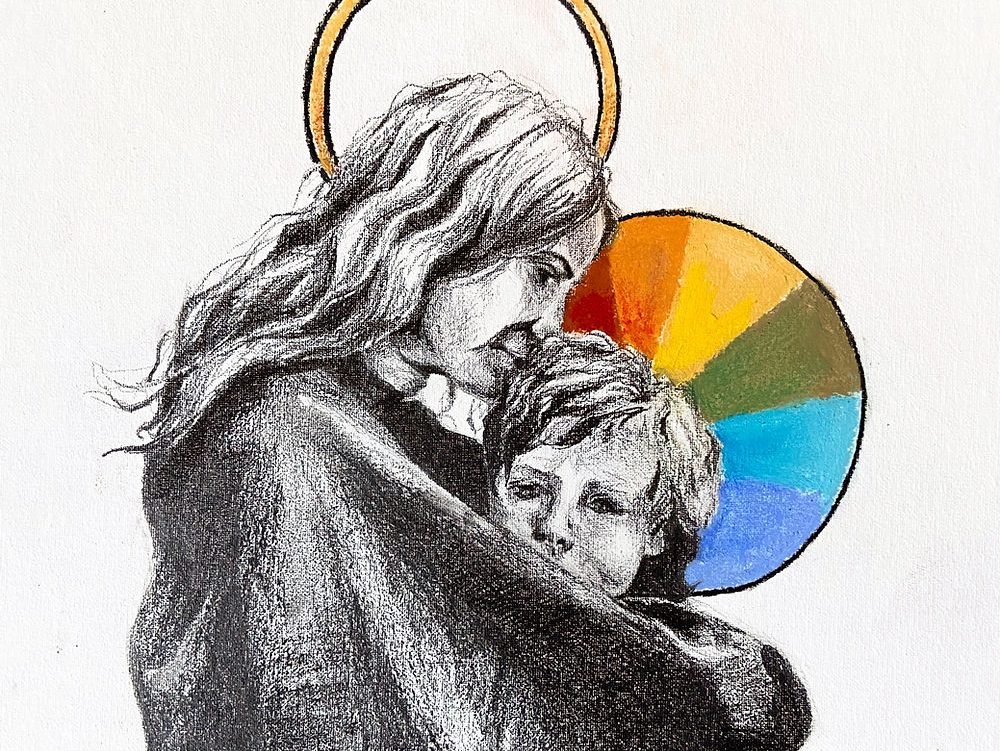
    Artwork: detail from “As You Are” by Jess Payne, @terraandsage

  • what we need is here

    The Second Sunday of Easter (Year B)
    Acts 4:32-35 

    John 20:19-31
    Episcopal Student Center, Austin, Tex.

    Every week near the top of the service, right before the first reading, we say a prayer that gathers the theme of the day. Today we ask God “that all who have been reborn into the fellowship of Christ’s Body may show forth in their lives what they profess by their faith.” Throughout Eastertide this will be something we come back to a lot. I like to think of the New Testament as really just an extended reflection on the first Christians trying to make sense of what has happened through the death and resurrection of Jesus, how it has changed their lives, and how they offer it to the people around them. Today we hear how the disciples in Jerusalem shared everything in common, how Jesus appeared to his closest friends and breathed a bit of courage into them all (but especially Thomas), and John begins to reflect on how being close to Jesus cleanses us of what separates us from God and unites us to one another. Time and time again, down through the ages, Christians have been returning to the discovery that nothing divides us from God. Nothing can divide us from the very source of life, connection, and joy. No matter what we’ve done, no matter where we are, no matter what is happening around us: through the power of the resurrection, Jesus is here. What we need—really need, deep down in our bones need—is here.

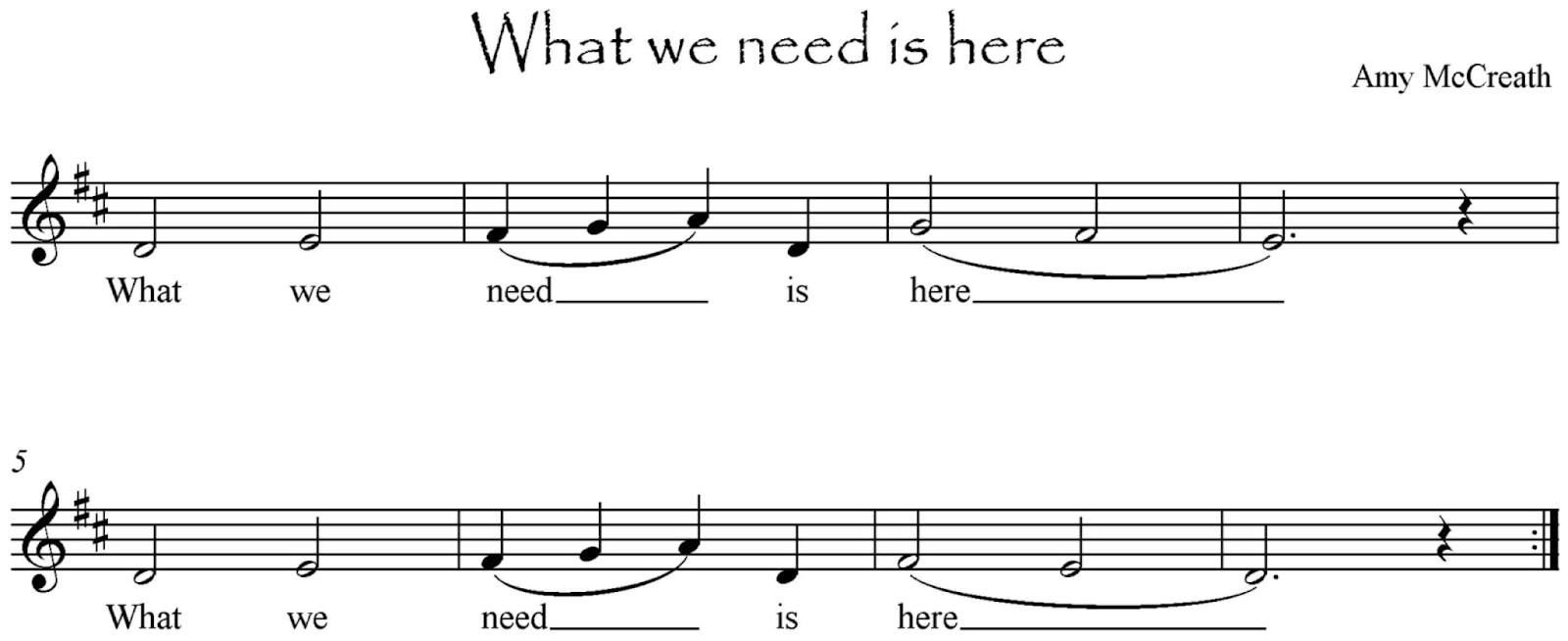
    Last week when we gathered with our sibling campus ministries, some of us learned this as a song: What we need is here, what we need is here. [excursus to teach the song to those who were not with us]

    “What we need is here.” This is less about finding the things we think we need, and more about discovering that what we have—in our hearts, in our relationships with one another, in our turning to God for strength—is enough for the days ahead. 

    When Jesus appears to the disciples in the upper room, it is not in a moment of great strength for him or for the disciples. It is the evening of the resurrection, when it is not at all clear what is going on except that a grave is empty when it should not be. The disciples are hiding, in a secret room with the doors locked, afraid for their lives. Even though he now has a body that can move through the walls and locked doors, Jesus is severely wounded, willingly retaining the marks of his suffering even after the resurrection.

    When we are scared, it is completely natural to run away, to retreat, to find a place where we feel safe and where we can take stock of the situation and ourselves. How are we doing? What do we need? What do we have? Many on campus find themselves in just such a moment, after the university closed the Department of Community and Campus Engagement earlier this week. A lot of people are scared, taking this as another sign that we live in a time and a place that does not value all our lives. On a more mundane level, there will be plenty of moments over the next few weeks when we are faced with everything that needs to happen before finals or graduation or all the things the summer holds and feel we are not up to the task. Moments like these heighten our awareness of what we lack. It is easy to believe that we do not have enough: enough courage, enough power, enough energy, enough faith, enough sleep, and on and on. And it is exactly into moments like these marked by fear and doubt and scarcity that Jesus shows up and says, “Peace be with you.” Jesus is with us, here in this room, wounded and vulnerable. The Body of Christ is here in this room, wounded and vulnerable… but never, ever defeated. Jesus continues to show us the example of his great humility, showing us his wounded hands and feet as if to say, “Death and all its friends did their worst, and here I am with you still.” Death will never have the final word. 

    If we really want to know something about the power of the resurrection, at the very least we are going to have to get down in the dirt with one another to be honest and vulnerable with each other. Jesus could have been resurrected without those scars, into a beautiful, perfect, unblemished body. He could have browbeaten Thomas into getting into line and forcing himself to believe. Jesus does neither of these things, and instead of hiding behind a show of strength, he continues what he began on the cross and uses his own weakness and woundedness to bring peace and new life. This is where Christian strength comes from: not from an insistence that everything is fine or that we are managing, but in being truthful about who we are and what we have. As we come to understand what we need and share those needs with each other, the promise of Christ is that within the community there is always enough to go around: enough strength, enough courage, enough love, enough nourishment, enough faith. When we are gathered, when we show up as ourselves and truly share with one another as those first disciples did—both the needs we have and the gifts we have—that is when the Body of Christ takes on flesh and blood. This is the way we become the Body of Christ: wounded, courageous, and open to one another. We will find ourselves united in heart and mind, holding everything in common, because our humanity is the one thing we all have in common. Jesus models this way of new life in the midst of woundedness, because living in the midst of limitation and vulnerability is the only way we know how to be. We may not find what we want or what we thought we needed, but we will find what we truly and deeply need: connection, courage, strength for the journey. We will find that what we need is, in fact, here.

    “Peace be with you,” comes the voice of Jesus. “As God has sent me, so I am sending you.” What we need is here. What this university needs, now more than ever, is here. Jesus knits us into his Body, to be the wounded hands and feet of peace wherever we go. What we need is here, what we need is here….

  • Maundy Thursday
    1 Corinthians 11:23-26
    John 13:1-17, 31b-35

    All Saints’ Episcopal Church, Austin, Tex.


    “How human is your Jesus?”
    That’s the question I ask myself from time to time
    Just to see if I remember.
    “How human is the Son of God?”
    Just to make sure I haven’t lost the plot of the outlandish claim
    That whatever it was that set off the creation of the universe
    And set the planets in their courses
    And reminds our atoms to keep holding on to one another
    Became a man who walked around in Galilee
    And reminded us to keep holding on to one another too.
    Divinely human.
    Humanly divine.

    How human is your Jesus?
    Who walked and talked and taught and healed
    And slept and ate and sweat and wept
    And laughed and raged
    and feared.
    Feared for his life, like anybody would.
    “Father, let this cup pass from me,”
    We will pray with him tonight.
    “Let them not take my life, let there be another way.”
    How human.
    How divine.

    How human to put your affairs in order,
    How human not to know
    What happens after, what’s coming next.
    Is it really time to go?
    How human to want to be together
    At table, with friends,
    Letting love carry them to the end.
    How human to find everyone you ever loved
    And make sure nothing’s left unsaid.
    How human to reflect,
    To count the days and nights
    To look at what you’ve stood for,
    and make sure it’s all set right.
    A farewell meal.
    A farewell lesson.

    He looks to us: to Peter and Mary and Judas and John
    And across the span of time to all his faithful friends.
    How shall we repay the Lord for all the good things he has done for us?
    The master who no longer calls you servants
    now calls you friend and bids you come, just as you are
    yes, you
    just as you are
    and not as someone you cannot, will not be.
    Love bids us welcome and our soul draws back
    And Love bids us stay.
    Set aside your armor,
    Set aside your shame.
    No rushing on to glory,
    No hurrying ahead.
    “Stay here, stay now, stay with me.”
    He takes your frail and body into his steady hands
    And gently holds and gently washes and gently, gently shows:
    “If you want to follow me, this is how to be;”
    Both servant and served,
    Both loving and beloved.
    He entrusts his broken Body to your waiting hands,
    and pours his Blood across your parched lips.
    “I love you. Remember me.”

    “How human is your Jesus?”
    Is the question I ask myself from time to time,
    Just to make sure I haven’t lost the plot
    Of a God-man who wanted to be sure we understood
    And filled us with a love that could save the world.
    A love worth dying for,
    A love uncontained by death,
    Unlimited by flimsy things like physics.

    This central act, this last command
    To remember him until he comes
    Spills outward and upward and on and on,
    Through peasants and kings and sinners and saints,
    In his land and our land and anywhere in between,
    To show us how to hold onto one another,
    To show us that where bodies are broken
    And the broken-hearted held close
    God is with us.

    God is with us.

    God is with us
    World without end.

  • planted, watered, fed
    You can watch this sermon above at 33:40

    Priestly Ordination of Allen Junek
    1 Corinthians 3:5-11 

    Luke 24:13-35
    St. Matthew’s Episcopal Church, Austin

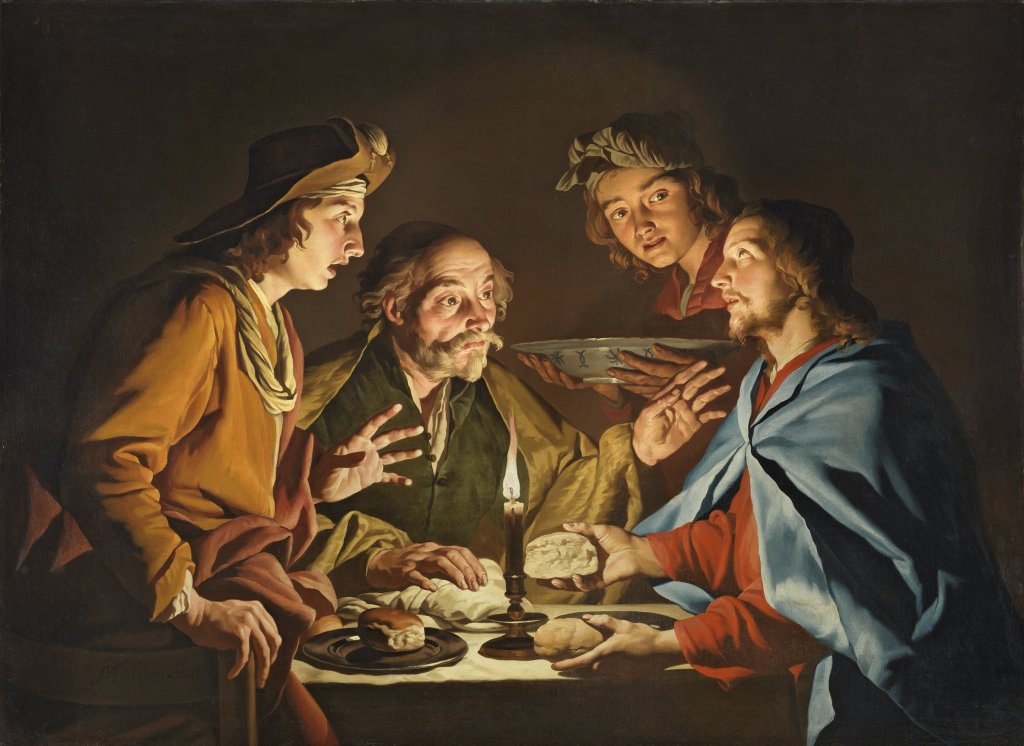
    Some years ago I was working for a parish in downtown Philadelphia. One of their major outreach programs was the Saturday Soup Bowl, which began in the predawn hours as the city’s homeless population would make their way to the parish hall. I don’t make a secret of the fact that I do not consider myself a morning person, but one Saturday I mustered the strength to make my way down to the church. The parishioners who ran the meal intentionally treated their guests as, well, guests. Each place at the folding tables was set with a placemat and utensils, and a volunteer would bring the meal to each person as they sat down: a cup of coffee, a bowl of soup, a bit of bread. And so that morning I served my neighbors, many of whom I recognized from walks around the neighborhood; for most of them it would be the only hot meal of the week. After the initial wave there was a bit of a lull, and I took a step back to enjoy, or at least endure, my own cup of bitter parish hall coffee. As I looked around the room and took in the scene of the mass of humanity who had joined us that morning, I heard a voice in my mind, very clearly and entirely unprompted: “The body of Christ, the bread of heaven.” In that moment, my eyes were opened. There was Jesus, breaking bread right in front of me fifty times over, as he promised he would be, knitting together a communion of people who by rights should have nothing to do with one another. My heart warmed within me; for a moment I saw someone who had always been and would always be there, the moment when you see a loved one and realize, “Of course it’s you. It was always going to be you.”

    God’s arrival in our lives will stop us in our tracks if we let it. As the disciples make the journey away from Jerusalem toward their home in Emmaus, a stranger comes alongside them and asks a simple question, and for a moment everything stops. “They stood still,” Luke tells us. “Are you the only one who doesn’t know what’s going on?” comes the reply. “Our world is in shambles, we are adrift, walking away from hope in a direction that we only chose because at least it’s familiar. There have been reports of what would be good news if only it were true, but we don’t trust the source–who would take us seriously if we took seriously those on the underside of society who are trying to show us something about God?” And although we do not recognize him yet, and although we have not yet trusted the good news that others have already brought us, Jesus begins the slow, long work of interpreting himself to us. In scripture and a sacred meal, he affirms everything we know in our hearts to be true, but are afraid is too good to be true. But study and careful explanation will only get us so far. We need to be human with each other too. Jesus sits with us and demonstrates that while he is the sustenance that nourishes body and soul, he is in need of something to eat too. He places a bit of bread in our waiting hands, and in that moment the resurrection becomes real. The stone is rolled away from our hearts, the embers of our love for the one who loved us first are fanned into flame, stilled hearts begin to beat, slack lungs fill with breath, adrenaline courses through every vein, and the body of Christ runs out into the world to find someone to tell. This is Jesus, our great High Priest, embodying the ministry of his people: to guide others to the places where he has promised to be found. Jesus waits for us in the opening of scripture and the sharing of good news, of any and all kinds. Jesus waits for us in the breaking of bread at folding tables and at this altar, where the gift of hospitality nourishes and strengthens feeble hearts. Jesus waits for us in the voices of the overlooked and disrespected and he waits for us in our ears when we dare to listen and trust.

    We gather here to give great thanks that Allen has been the beneficiary of this, the Church’s ministry. We gather as a community of communities who have found Jesus where he promises to be found, who have stayed close to him, and invited others to do the same. Some of you planted, some of you watered. Some of you know intimately what it means to care for the sick, the poor, the overlooked and dispossessed. Some of you have nourished Allen in his moments of distress. Some of you have taught him how to pray. Some of you have shown him time and time again that God doesn’t make mistakes, and that includes him. But thanks be to God that God is the one who has given the growth, who has taken all of this and brought Allen to a place where he could look at a bit of bread placed in his hands and say, “Of course it’s you. It was always going to be you.” Today God gives another priest to the Church to keep us focused on Jesus and the places he has promised to be found, to embody Christ to the world even as he is known to us in the souls and bodies of all who need nourishment and a word of good news. God has been deeply, deeply good to us all in bringing Allen to this day.

    My brother, as you continue on this path, remember those who have loved you into being, and your love for the one who loved you first. Hold it close, and hold close the people he brings to you, for the love that binds us together is the only thing worth staking your life upon. It is the only thing that will sustain you when the work is hard, when you question why you are here at all, when the love you dwell in and offer to others is not returned. Guide your people to the places where Jesus is, and not to the places where he is not. Pay close attention to the microscopic ways God is reordering the cosmos all around you. Remember to take deep breaths. Plant and water as you have been planted and watered, and let God do the rest, for we serve a God who is faithful, and today we have you to show for it.

    Every ordination is a celebration of the ministry of all God’s people and of God’s faithfulness to us in calling and preparing leaders for that ministry. Every ordination is celebration that there are people who are just unhinged enough to say yes in laying down their lives for this vocation. Every ordination is a celebration that God is raising up people who were cast down, renewing that which had grown old, perfecting all things in and through Jesus Christ, the only foundation which has been laid for us to build upon. To God be the glory.

  • irrepressible thoughts of death day
    You can watch this sermon above at 11:00

    Ash Wednesday
    Joel 2:1-2,12-17
    All Saints Episcopal Church, Austin

    Last summer America went to the movies in a big way for Greta Gerwig’s treatment of a pop culture icon: Barbie. I was there opening weekend in my best neon pink-and-yellow button-down shirt and cotton-candy-pink sneakers to join Barbie and her friends on their perfectly perfect day: the best day ever, in fact, just like the day before and tomorrow and the day after and the day after, forever and ever, amen. Barbie lives in a world without trouble, because she is, of course, a doll, and doesn’t know any better. Early in the film she is joined by her friends for a party, with wonderful dancing and better music, where she is the center of attention. Over the din of the music, the blonde bombshell suddenly shouts to her friends: “Do you guys ever think about dying?” and the music scratches to a halt. Welcome to Ash Wednesday. That afternoon I was fresh off seeing the biopic about Robert Oppenheimer, the inventor of the nuclear bomb, so I was in fact mindful of death, destroyer of worlds–but set that aside. “Do you guys ever think about dying?” is the question Ash Wednesday asks us, blundering in every year on top of whatever bright lights and driving beats surround us, and blundering this year onto the frilly, pink trappings of Valentine’s Day. The Church’s somber, skull-laden reminder that you are mortal and will one day die does not sound like good news in the ear of most people, who would rather be doing something more fun, or at least less severe. But if you are here on this day of all days, then I am guessing that you are not like most people.

    Back in Barbieland, Barbie realizes that her irrepressible thoughts of death are connected to goings-on in the Real World, where she must travel to learn that things are not as perfectly perfect as she thought. Far from what could have been an easy paycheck cashing in on nostalgia, Gerwig and her cast offer us a thoughtful, if sometimes silly, set of reflections on womanhood, masculinity, capitalism, the use of power, the stories we tell and the ones we don’t, and what it means to be human. Gerwig herself notes the impact of her Christian upbringing on this story, alluding to Genesis and the story of the fall: “[Barbie lives] in a world where there’s no aging or death or pain or shame or self-consciousness, and then she suddenly becomes self-conscious — that’s a really old story. And we know that story.” In other words, Barbie’s growing awareness of her self and her relationships, and of the reality that she could one day come to an end means she has to become human.

    In a few moments the clergy will remind you that as a human you are made of dust and that is where you will return, and then we will rehearse our sins. There are plenty of Christians who would like you to think that we are lowly worms groveling for God’s approval. But Ash Wednesday’s startling reminder of our mortality is not a symptom of theological low self-esteem or a nihilistic fixation on death for its own sake. Rather it is the blast of the trumpet that the prophet Joel sounds. We are startled into self-awareness; we have something to live for and we have not been using the time well. The Church invites us to remember that we are made of dust whether we ever attain self-awareness or not, but that things are likely to go better for us if we do.  

    We come to church to tell the truth: about ourselves, about the world, and about God. The truth that Ash Wednesday tries to convey has something to do with all of those. We tell the truth about ourselves: that we are actually not that good at knowing what is going on in our own soul, that we are limited in our ability to free ourselves from the things that burden us, and that our lives will one day end. We tell the truth about the world: that because of these things just mentioned, we are, frankly, not doing that well and we are caught in a downward spiral, though that insight seems less controversial than it might have once been. But above all, we gather today to tell the truth about God, who hates nothing they have made and forgives the sins of those who change their hearts and lives. When I finally pull out of the dreadful spiral about the state of the world and my own crooked heart, I remember that. I find myself surrounded by voices calling to me and reminding me of the truth that this is not all there is. We follow a God who is listening and who does care, who—let’s admit it—would be within their rights to feel angry about the harm being done to their good, good, good creations; anger not out of cruelty or spite, but out of love, steadfastly, to the thousandth generation, brimming, overflowing with compassion and mercy.

    And if you are here in this church today, then you are already that path that leads to the loving, merciful, compassionate heart of God, even if you are just starting out. When we realize who we are and who we have been, we can take courage that the sometimes painful work of truth-telling and change is essential to growing in and toward love. This day is a reminder that life is shorter than we think, and the time is always right to ask for God’s help in making a change for the better, even if you aren’t sure what that change might be, even if you know exactly what I’m talking about but don’t feel brave enough. 

    For her part, Barbie must go on a journey of realizing that self-awareness is a genie that can’t be put back in the bottle. In the end she finally chooses to stay in the Real World and lean into becoming human: self-awareness, death, and all. She leaves behind life as she thought she knew it so she can move closer toward what she was made for, and in the process realizes that maybe those irrepressible thoughts of death weren’t so alarming after all. As we begin to mark the pilgrim way of Lent, lean in. Practice self-awareness. Tell the truth. Become more human. And maybe, at least for a minute, think about dying.

  • “god is under the rubble”
    You can watch this sermon above at 25:43.

    The Fourth Sunday of Advent, Year B
    Luke 1:26-38, 44-56
    All Saints Episcopal Church, Austin

    There will be no Christmas in Bethlehem tonight. 

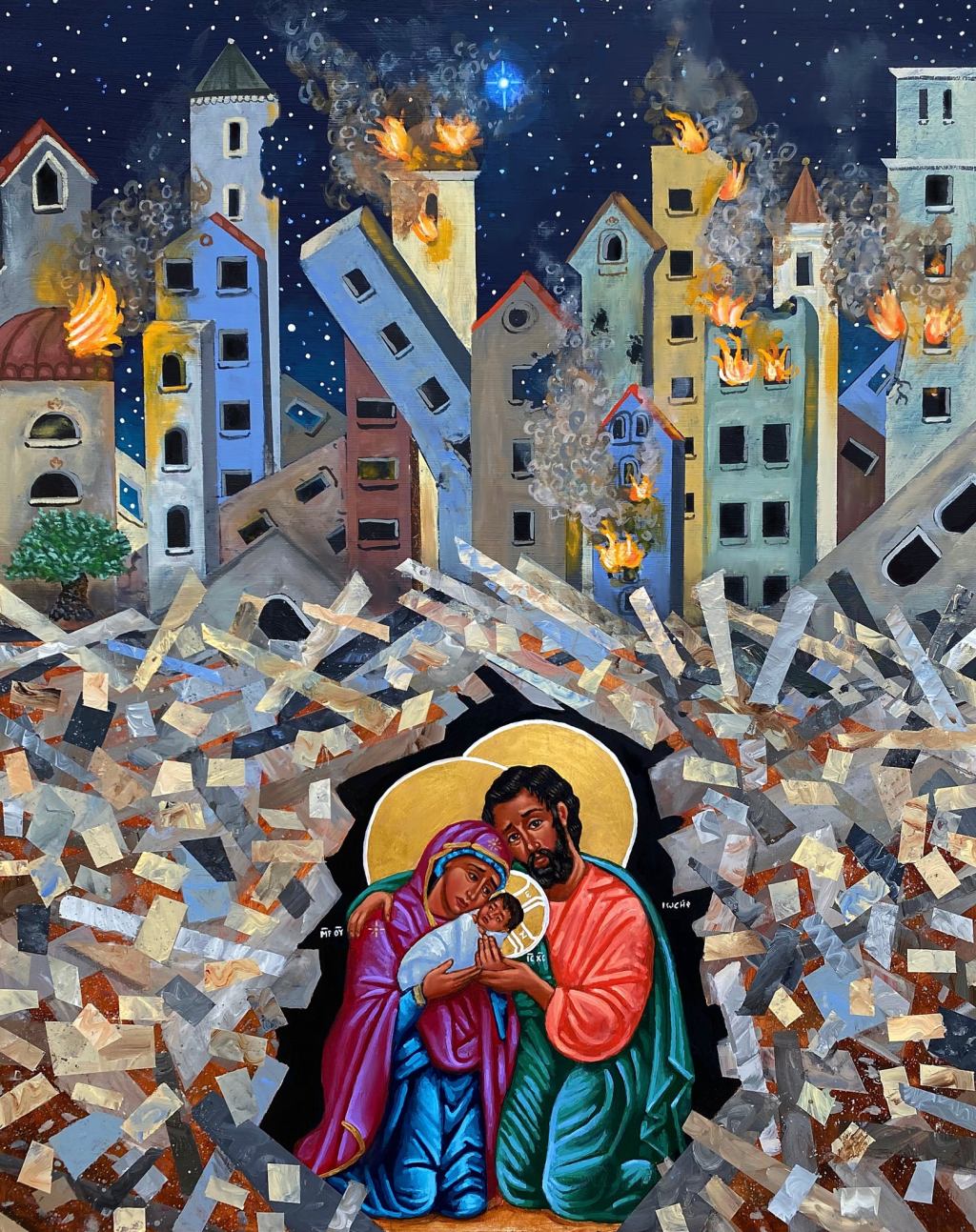
    This was the decision made several weeks ago by the leaders of the Christian churches in Israel, Palestine, and Jordan, across the spectrum of denominations: to forego the typical festivities that mark the birth of Jesus. Bethlehem, as you might imagine, normally welcomes thousands of pilgrims this time of year. But this year there are no parades, no Christmas markets, no lights, no tree in Manger Square. Instead, a more somber and restrained observation of the season as the Church in the Holy Land calls the world to mourn the more than 20,000 lives lost in the war in Gaza since October. Bethlehem lies within the West Bank of the Palestinian territories, just south of Jerusalem, and in the face of such devastation and grief, our brothers and sisters there are standing in solidarity with the victims of violence in Gaza. At the Lutheran church in Bethlehem, this year the nativity scene has been replaced with a scene of the infant Jesus swaddled and surrounded by a pile of rubble. Pastor Munther Isaac asked in his sermon yesterday, “We are asking, could this be our fate in Bethlehem?… Is this our destiny too?… In Gaza today, God is under the rubble. And in this Christmas season, as we search for Jesus, he is to be found not on the side of Rome, but our side of the wall.”

    It’s a little after 6pm in Bethlehem, and it is, we pray, very quiet right now. There will be no Christmas in Bethlehem tonight.

    I don’t spend too much time reading the news these days, truth be told, and I haven’t decided if that’s a personal flaw or an emotional self-defense mechanism. But even so, it is nearly impossible for me to escape the stories and images of what has been happening to the citizens of Gaza in plain sight these past months, they are so ever-present: the indiscriminate bombing of hospitals and houses of worship, the brutal murder of pregnant women seeking refuge, two Palestinian women taking refuge in a church who were killed by snipers, the occupation of Al Ahli Episcopal Hospital and arrest of most the staff. The W.H.O. reports there are no functioning hospitals left in Gaza. In Gaza the Christian population was under 1000 people before the war, with lineages going back centuries, and it is unclear what will happen to them now. These are what Fleming Rutledge would call Advent stories–reminders that “Advent begins in the dark” when we look deep down into the darkness of the human condition and find God’s absence, underscoring the desperation of our predicament and need for divine intervention. The Church’s prayer in Advent is always maranatha! “Come quickly, Lord Jesus!” 

    It is not the first time the land of the Holy One has found itself in such a state. The Gospels all open onto just such a scene of terror, with the brutality of an occupying army and the possibility of bloodshed around every corner. Indeed Jesus will barely have been born before the rulers of the kingdom begin calling for the execution of children and Mary and her baby flee for their lives; most churches skip that part of Matthew’s gospel. No matter how we try, these stories of the birth of Jesus are not warm and cuddly, never as pious and sanitized as we make them. They are visceral and dangerous, a happy outcome not at all guaranteed… and that is why the story of the salvation of the world begins there. It is precisely these places of profound vulnerability that we are able to perceive that God is at work. It is not just any moment that God chooses to break into the world and into the life of a young woman from Nazareth to make an impossible request. God did not wait for Mary’s engagement to Joseph to be happily resolved, or for an era of safety and prosperity when Mary’s people controlled their own destiny. God is seldom in the habit of appearing to those who have already won victory, who enjoy many of life’s comforts – or perhaps God might, but it is harder to hear the messengers. It is precisely when we are at our lowest point, when the last threads of hope begin to unravel, that God shows up, when one of God’s messengers appears and says, “Be not afraid. The Lord is with you.”

    God draws nearer to Mary than to any other person before or since, and her response to this action is quite simple, and astonishingly clear. After her consent–“Be it unto me according to your word”–she immediately sets out to meet her cousin Elizabeth, who is also improbably pregnant, and together they rejoice in what has happened and what it means. We sang Mary’s song a few moments ago: “Tell out my soul the greatness of the Lord! Unnumbered blessings give my spirit voice.” But in her own words: “My soul proclaims the greatness of the Lord, my spirit rejoices in you, O God my Savior…. You have shown strength with your arm, and scattered the proud in their conceit, casting down the mighty from their thrones, and lifting up the lowly. You have filled the hungry with good things, and sent the rich away empty.”

    For centuries this song that comes on the heels of the incarnation has been the key to how Christians understand God’s vision for the world. The one Mary holds in her womb–the most high God, the eternal Word who spoke and the stars sang for joy, whose spirit hovers over the earth and breathes all things into being–this Lord of all Lords is being knit together in her womb. God’s decision to enter the world in this way through this person, lowliness begot of lowliness, changes everything. The Mother of our Lord, the first person to say yes to Jesus, knows him best of all, and her song reechoes down the ages to remind us that God’s intent is to topple every earthly power, to snap every weapon, to humble every cruel heart, and to come to the rescue of the downtrodden, the grieving, and the hungry. Our Lady joins the psalmist in his invitation: “Come now and look upon the works of the LORD, what awesome things he has done on earth. It is he who makes war to cease in all the world; he breaks the bow, and shatters the spear, and burns the shields with fire” (Psalm 46). God comes into the world and calls for war to cease. God calls for a ceasefire: unconditional, total, now, and forever. A vision of the world that does not look like Mary’s song is not the work of God, and it is not the work of Jesus.

    God has told us whose side God is on, in no uncertain terms; and it is through the Mother of our Lord that God has shown us who is worthy to bring him into the world that we might see him more clearly: the meek, the unpowerful, the unbelievable, the underdogs. “Consider your own call, brothers and sisters,” St. Paul reminds us. “Not many of you were wise by human standards, not many were powerful, not many were of noble birth. But God chose what is foolish in the world to shame the wise; God chose what is weak in the world to shame the strong; God chose what is low and despised in the world, things that are not, to abolish things that are, so that no one might boast in the presence of God” (1 Corinthians 1).

    There will be no Christmas in Bethlehem tonight, but the good news is that God’s plan of salvation is not confounded. The incarnation, the enfleshment of our God, continues in every generation. Mary makes her way to Bethlehem even now, and Christ will be born among the rubble, as he always has been. These are the moments, the places, the people into which Christ is born.

    Will we look for him there?

    Will we call for his protection?

    Will we receive the message of his mother?

  • the king’s party
    This sermon can be watched above at 30:13.

    The Twentieth Sunday after Pentecost (Proper 23A)
    Matthew 22:1-14
    All Saints Episcopal Church, Austin, Tex.

    For whatever else can be said about St Matthew’s parable of the wedding feast, you have to admit he has a clear viewpoint. St Matthew cleverly uses this story for a dual purpose: it lets Jesus put his rivals in their place and ratchets up the dramatic tension as we hurtle towards the events of the crucifixion, but this story also winks at St Matthew’s first readers, who were concerned about the moral purity of their community. In short, he seems to be saying, “We’re all here whether we earned it or not, so just mind your own business, enjoy the party, and let God sort it out.” The allegory is simple: God is the king, Jesus is the king’s son, unbelievers are the invitees who don’t show up and invite the king’s rage, and we are “the good and the bad” all dressed alike, but the people who truly don’t belong are going to be found out in the end. The Word of the Lord?

    With due respect to St Matthew, most people I’ve talked to this week, and I’m sure many more people than that, do not hear this story as good news. If anything, we hear it as something masquerading as good news, or something that we think we should believe is good news, even if our heart does not strangely warm within us to let us know that it is good. Don’t get me wrong: I’m not saying this traditional interpretation can’t be good news. Lord knows sometimes we need to be reminded that our invitation to the party isn’t because of something we have done or successfully avoided doing, but because of God’s generosity. Sometimes we need to be reminded that if we want to stay at the party, we have to act like we care. Sometimes we need to be reminded that the moral purity of the Church is not guaranteed, or even up to us to figure out in the final analysis. I think those would make fine sermons. But if we believe that the words of Holy Scripture are alive to us, a continuing channel of good news to every time and place, I want to invite you into an experiment with me. What does this story have to tell us, not about the anxieties of the first-century church, but about today’s anxieties? Let’s step back and review.

    The kingdom of heaven may be compared to a king who gave a wedding banquet for his son. The king is powerful and well-connected; he controls commerce and industry, entertainment, the powers of war, and many are eager to please him or at least profit by being close to him. After the first round of guests fail to materialize, we see that the king’s ego is fragile; he will not be made a fool of, and he sends out his forces to exact punishment. Participation is mandatory. The banquet hall must be filled. And like it or not, soon everyone is swept up into the king’s party. It’s a pretty good party! There’s good food and drink, live music, sparkling conversation. You can fill your belly, mingle and see who’s who, and forget the outside world for a while, where there is enough weeping and gnashing of teeth for this life and the next. Who knows? You could meet someone who has just the right connections to give you a leg up. But soon enough, there is an altercation. The king finds someone who is not dressed to the nines, who is not enjoying the excess on offer, who has been sized up and found lacking, as if they were given a choice about their attendance in the first place. So the king throws them out of the party, if not into hell, then at least into the world as we know it. The other guests simply watch and say nothing, or turn their back to the situation and carry on with their conversation. The kingdom of heaven may be compared to this.

    Jesus begins the story with an invitation. Listen to this story, and see what you find in it. Hold it up against what he has taught you about the kingdom of heaven. Who do you see in this story? What does it sound like? Where is God in it? Where are you?

    One of the things about the world of scripture is that time and time and time again we are reminded that the faces and names and even the robes of the kings of this world may change, but their proclivities do not. Even Jesus knew what he was doing when he painted a picture of a king who was vengeful, powerful, wealthy, and jealous. There have been an untold number of stories coming to us over the past several days from Gaza or from Washington that show us just how wild the party has gotten: a cavalcade of people jostling for power, influence, revenge, wealth, and so much more, as the expendable, the inconvenient, and the demonized suffer in outer darkness, a living hell. Those who are thrown out are the ones we have decided do not belong, who remind us of inconvenient truths without even having to open their mouths, who show up in the way that Christ so often does. St Matthew himself will remind us of Jesus’ warning in a few weeks, “As you have done to the least of these, so you have done to me.” But the party goes on. “Pour us another round of the blood of the innocent, which is so intoxicating. Pay no attention to the soldiers bothering those people over there; they aren’t even wearing the right clothes.” And even if all the partygoers are not directly participating in the worst of the revelry, there are plenty who are content to stay silently and enjoy the food while it lasts. The kingdom of heaven may be compared to this, but God help us all if the comparison is favorable. It may not seem like it, but we are closer to good news now than we were. At least now the story is starting to tell the truth, about the kings of this world and the party we are all caught up in. 

    The kingdom of heaven may be compared… to what? Listen to another description of the kingdom: “Like heat shaded by a cloud, the tyrants’ song falls silent. On this mountain,the Lord will prepare for all peoples a rich feast… [with] choice wines well refined. He will swallow up on this mountain the veil that is veiling all peoples, the shroud enshrouding all nations. He will swallow up death forever. The Lord God will wipe tears from every face; he will remove his people’s disgrace from off the whole earth, for the Lord has spoken.” (Isaiah 25)

    Listen again: “Blessed are the poor, for theirs is the kingdom of heaven. Blessed are the weak, the hungry, the merciful, the grieving, the persecuted, the peacemongers… for theirs is the kingdom of heaven.” (Matthew 5, Luke 6)

    Jesus has hidden another gift inside this story, which is that it is unfinished. Outside the gate there is weeping and gnashing of teeth, to be sure, but in their hurry to get back to the party, most of the people inside missed something. Not far away, huddled around a few candles and a simple feast of bread and wine, is another party, and the guest list is one for the ages: all those too poor, too weak, too merciful for the main event. And every time the king casts someone out into the darkness, someone hurries over and invites them out of the darkness and into this small but brave and marvelous light, where violence and quarreling has been removed from the equation, where tears are wiped away, where Death and all of his friends have no invitation, and the table somehow is always as long as it needs to be, with more room to spare. The good news is that Jesus has told us at great length what the kingdom is like, and he trusts us well enough to be able to tell the difference. The parties of all the kings through all the ages will and must come to an end. But through words, through the example of his beloved, through his very own Body, Jesus has assured us that his party goes on, world without end.